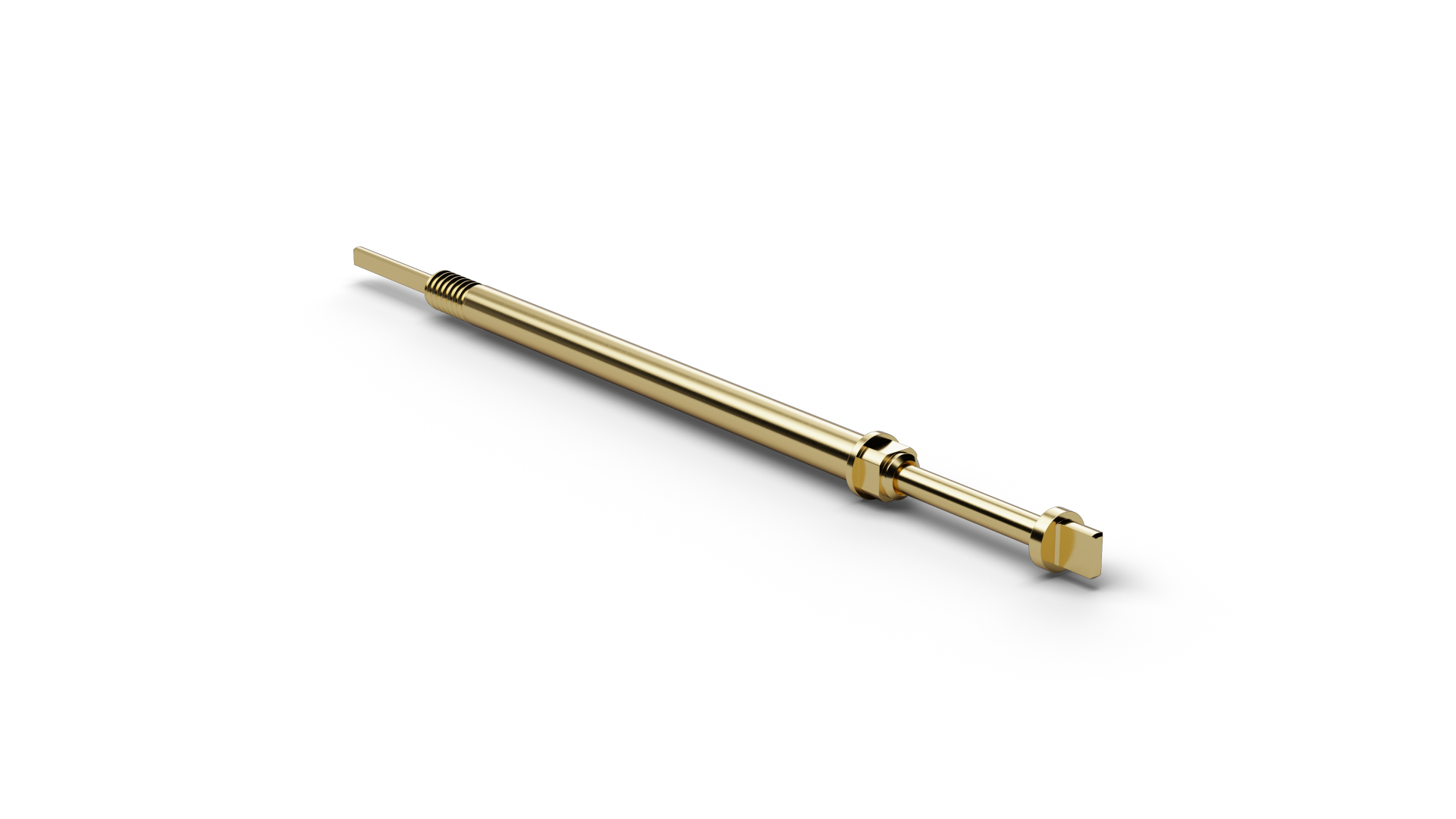
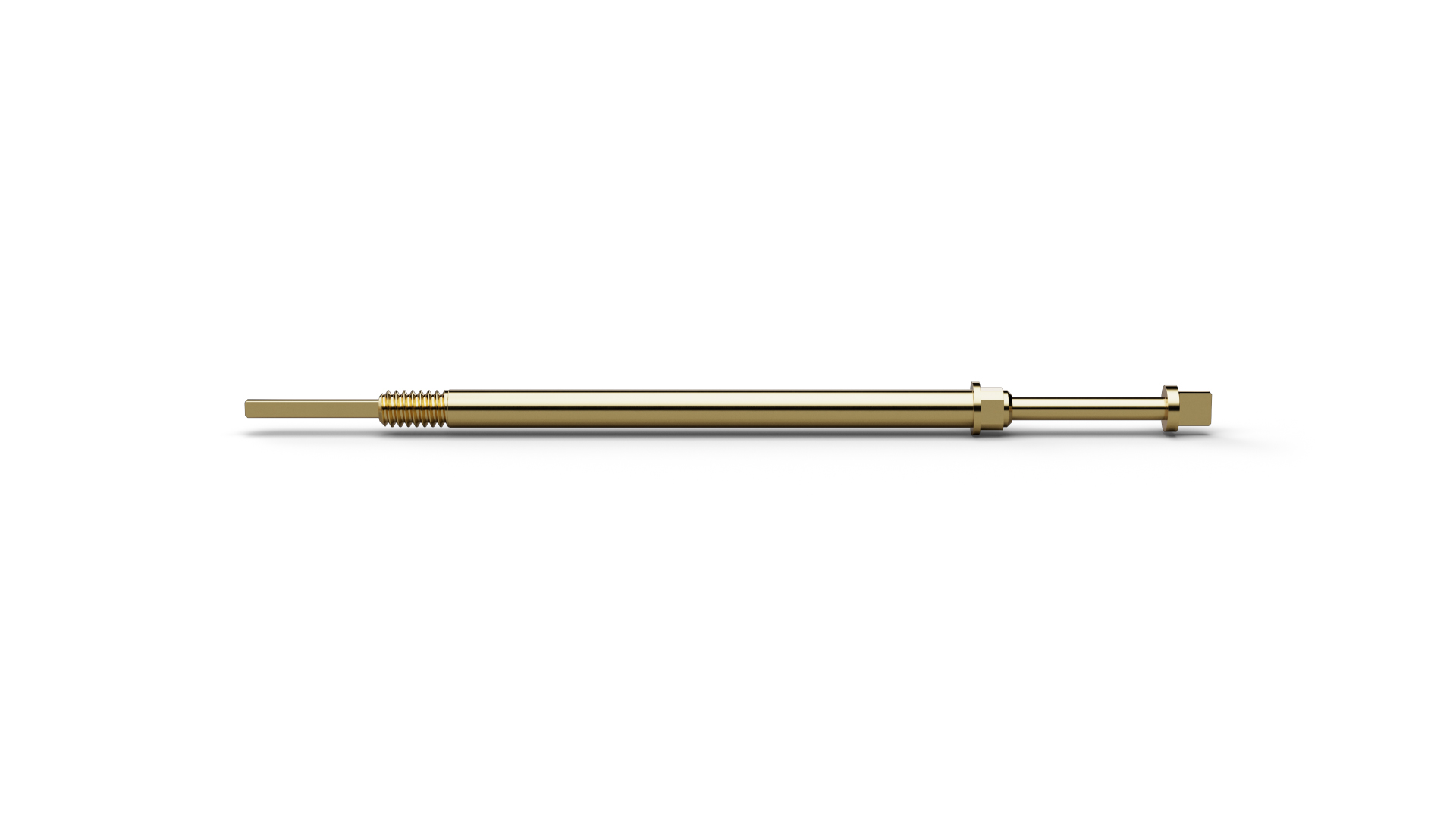
Technical data
| General | |
|---|---|
| Structure | Step Probe |
| Type/family | F756SP |
| Pitch (mm/mil) | 2,54 / 100 |
| Temperature | -45°C...+200°C |
| Additional definition | SP |
| Dimensions | |
|---|---|
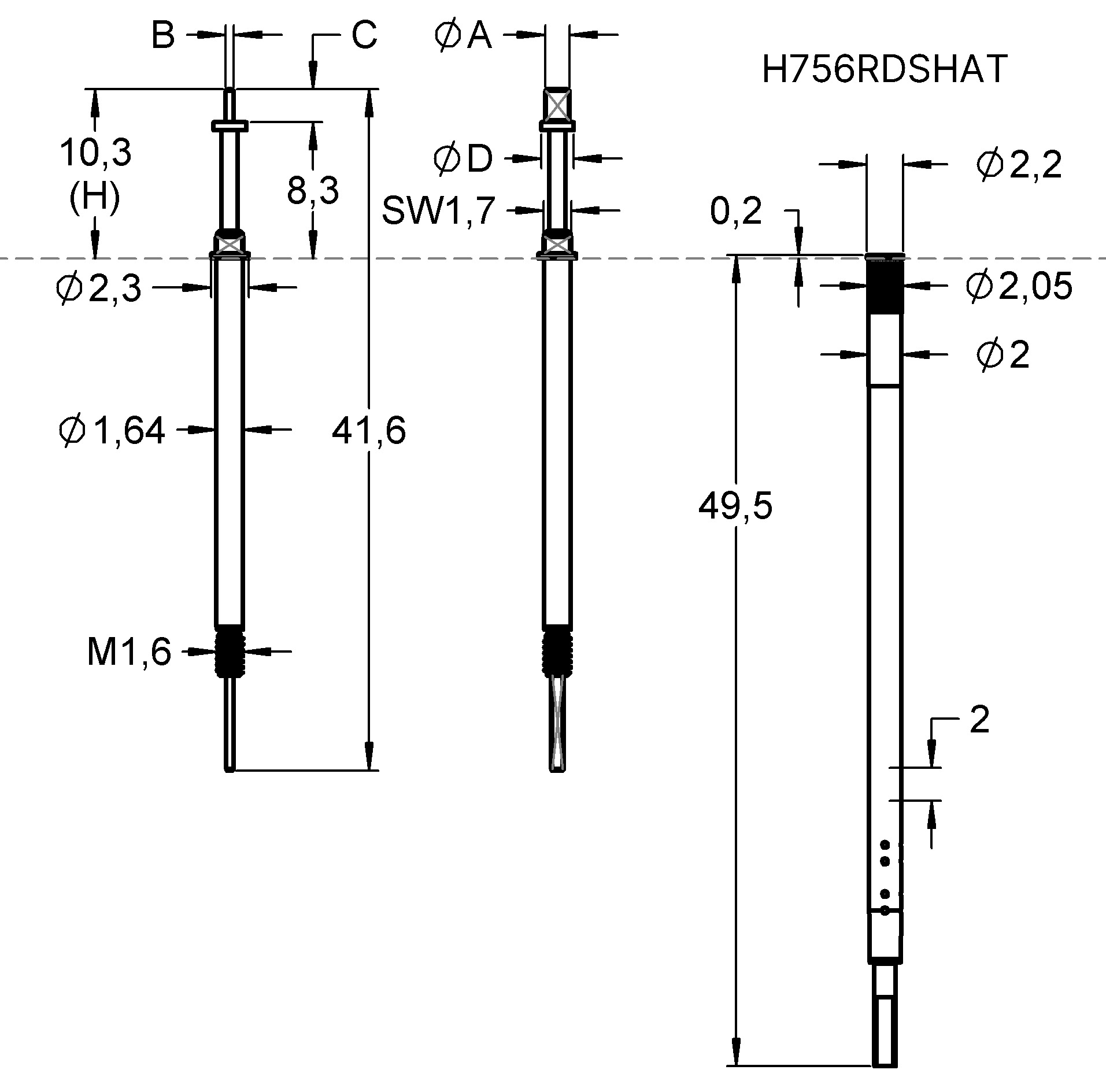
| Total length (mm) | 41.6 |
| Protrusion height (mm) | 10.3 |
| Tip style diameter (mm) | 1.5 |
| Barrel diameter (mm) | 1.64 |
| Collar diameter (mm) | 2.3 |
| Press ring diameter (mm) | 2.3 |
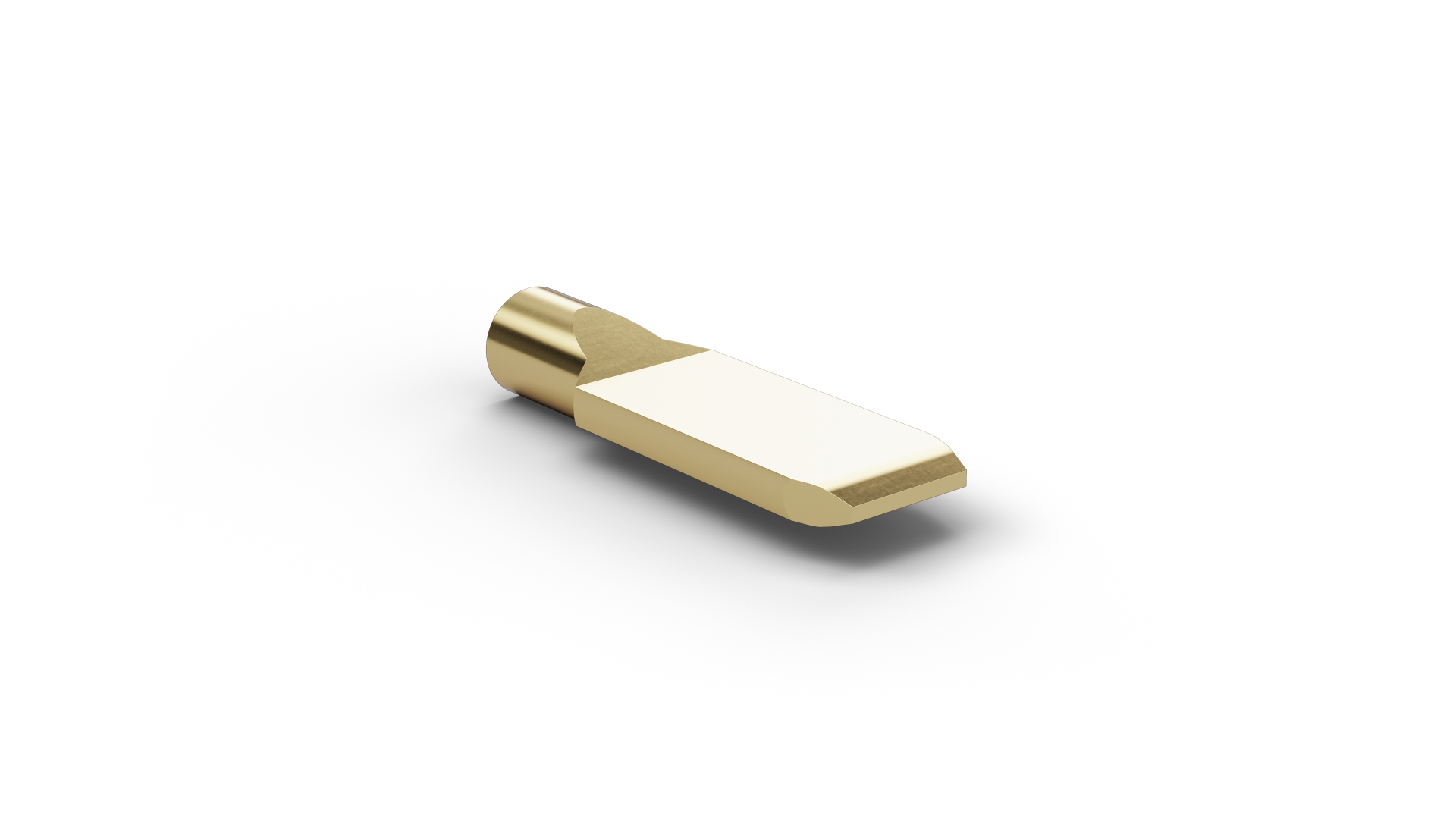
| A – spade diameter (mm) | 1.5 |
| B – spade width (mm) | 0.5 |
| C – spade length (mm) | 1.5 |
| D – plate diameter (mm) | 2 |
| Materials and surfaces | |
|---|---|
| Tip style | 89 |
| Plunger material | Beryllium copper |
| Plunger plating | Gold |
| Barrel material | Brass |
| Barrel plating | Gold |
| Spring material | High-grade steel |
| Spring plating | Uncoated |
| Mechanical specifications | |
|---|---|
| Preload (cN) | 60 |
| Spring force (cN) | 150 |
| Nominal travel (mm) | 4 |
| Maximum travel (mm) | 4.4 |
| Pointing accuracy +/- (mm) | 0.08 |
| Thread | M1,6 |
| Tool size (mm) | 1,7 |
| Electrical specifications | |
|---|---|
| Continuous current (A) | 5 |
| Typical contact resistance (mOhm) | 25 |
Graphics
Beschreibung des Produkts
The Step Probe F75689B0004G150SP (item number 1031662) is a Spring Contact Probe with a disc-shaped contact area for position and presence testing. On F75689B0004G150SP, electrical contact is established only at the intended penetration depth, making the Step Probe suitable for position and presence checks on connectors. F75689B0004G150SP is suited to contacts located in housings, recesses or difficult-to-access areas because its disc head makes contact only at a defined penetration depth. Key mechanical specifications for F75689B0004G150SP include pitch 2.54 mm / 100 mil, step diameter 2 mm, spring force 150 cN, pointing accuracy ±0.08 mm. The electrical rating of F75689B0004G150SP combines 5 A continuous current with 25 mΩ typical contact resistance. The stepped contact geometry of F75689B0004G150SP makes electrical contact only in the intended installation position and can therefore help detect missing or incorrectly positioned terminals.